

Ralf Brueck
Ralf Brueck was born in 1966 in Düsseldorf and grew up in the Bilk district.
He studied at the Düsseldorf Art Academy from 1995 to 2003, first with Bernd and Hilla Becher and later with Thomas Ruff, whose master student he became in 2002. Ralf Brueck is one of the younger exponents of the Düsseldorf School of Photography. After completing his studies at the Düsseldorf Art Academy, he was awarded the Villa Romana Prize. Further scholar- ships followed between 2005 and 2019 with periods spent abroad in the US, China, Italy, and Finland. Ralf Brueck lives in Düsseldorf.
Where others treated the photograph as an objective record, Brueck treats it as raw material for reinvention.
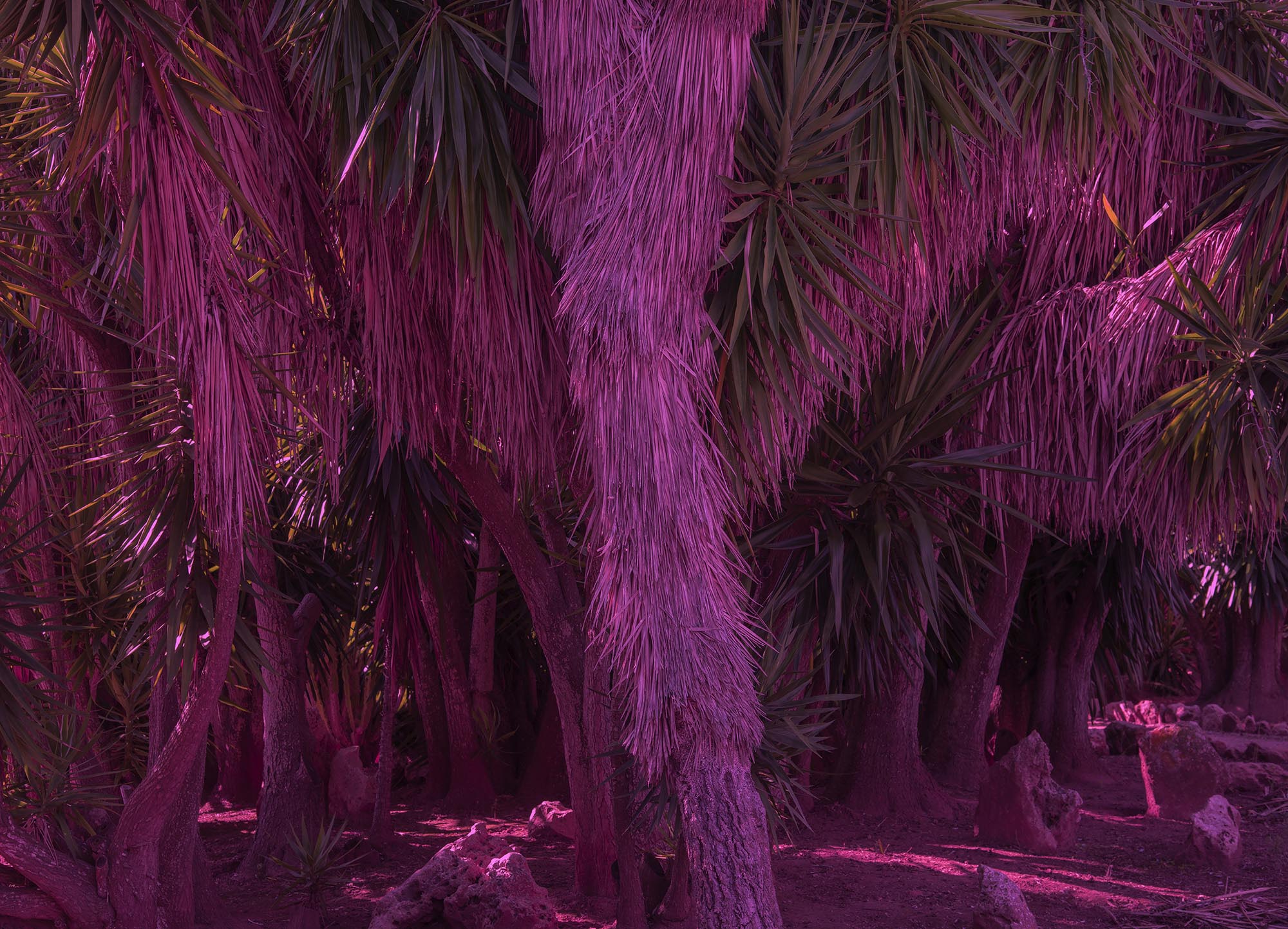
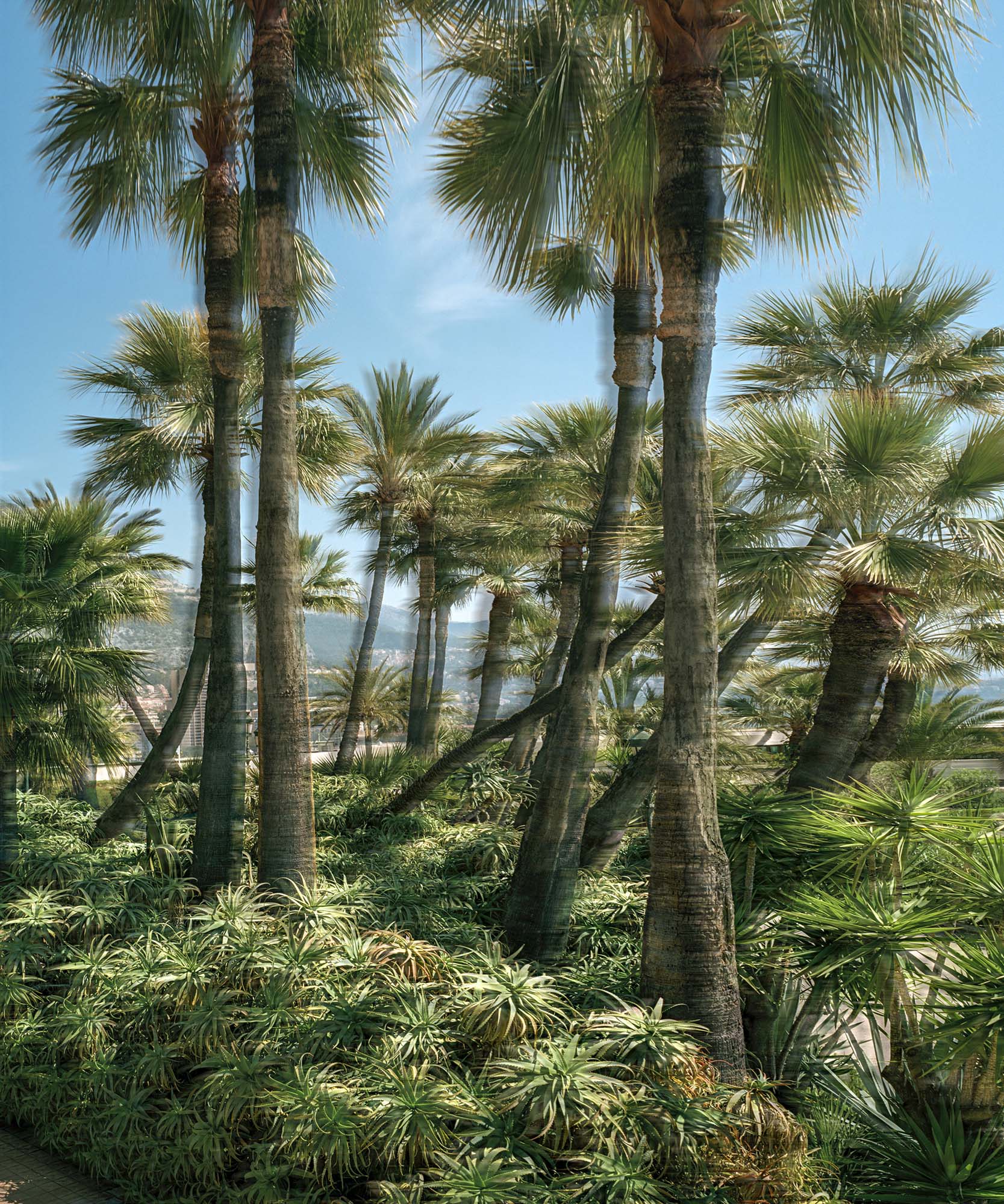
His two central bodies of work, Synthese and Deconstruction, articulate the poles of his practice. In Synthese, begun in 2018, Brueck photographs landscapes, caves, botanical scenes and geological formations, then fuses the natural with the artificial through digital intervention — merging colors, elements and perspectives into new, unsettling unities that hover between beauty and artifice.
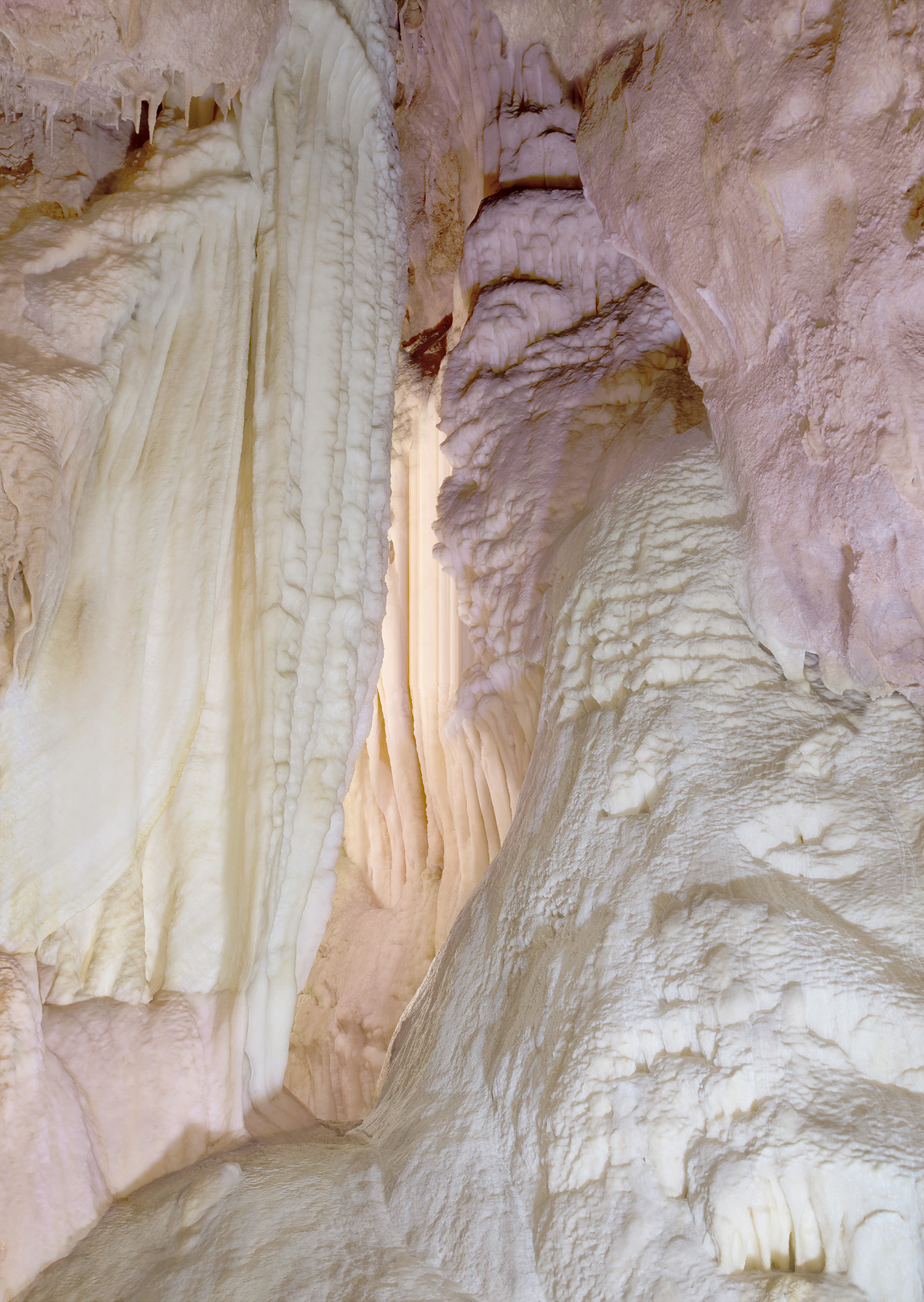

OK Coral, 2018
What would a grotto look like that would be immersed in “Living Coral“, the Pantone tonal color that was chosen as one of the fashion colors of the year in 2019 (OK Coral, 2018). Or rather a sweet rosé that, like cotton candy or powder snow, transforms the picture into a carious feast for the eyes. When data companies and algorithms take the place of postcards, picture calendars or wallpaper with gazillion of new photographs, one may have to find other poetic practices.
Deconstruction moves in the opposite direction: rather than synthesis, it enacts dissolution, taking architecture and urban space and breaking down pictorial boundaries until the image edges toward abstraction, at times resembling painting or drawing more than photography.
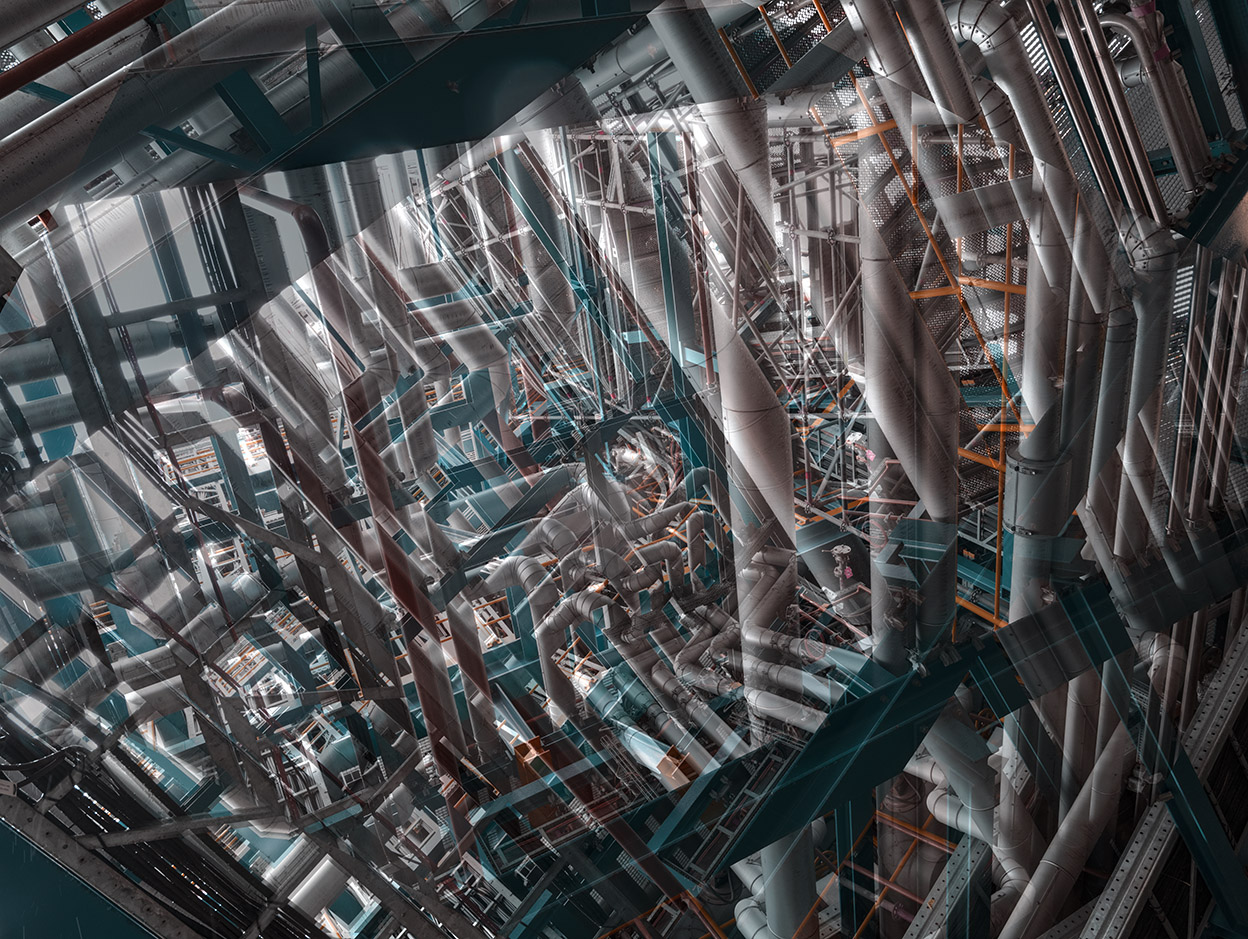
Gravity, 2026
Gravity, 2026, The reflection functions reflexively through compression and superimposition. Much like a self-reflection in a storefront window. Pipes, struts, and industrial elements intertwine to form a vibrating field reminiscent of the visual strategies of Futurism, Cubism, and photographic montage. The space dissolves into forces and directions; what becomes visible is no longer a place, but a state of acceleration and gravity.

SCOPE -2015
The ceiling of a high-end department store no longer appears merely as photographically captured detail, but transforms into a crystalline, almost symbolic structure that straddles the boundaries of architecture,ornamentation, and abstraction. It is precisely here that the connection to the more recent works lies: here, too, it is not about mere documentation,but about transformation.


